Quick Snap
 I’ve been greatly enjoying the photography of Sveinn Steinar Benediktsson, and wanted to share.
His work often has the feeling of capturing scenes from a Nordic post-apocalypse.
I’ve been greatly enjoying the photography of Sveinn Steinar Benediktsson, and wanted to share.
His work often has the feeling of capturing scenes from a Nordic post-apocalypse.
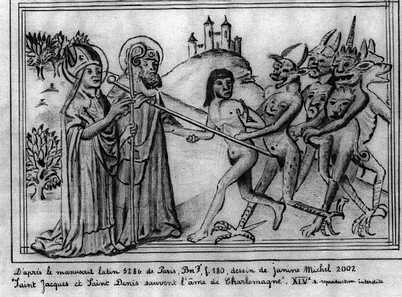
Santiago, the capital of Chile, was founded by the Spanish Conquistador Pedro de Valdivia in 1541. The Spanish, not being particularly welcome in the neighbourhood, were met with some resistance from the natives.
The Inca ruler Manco Cápac II warned the new rulers that his Indigenous people would be hostile to the occupiers. – Wikipedia
This was a bit of an understatement, as the few hundred Spanish at the site were quickly inundated by thousands of natives who were annoyed with the land grab.
So why do we still have a city of Santiago at all? Was it the Spanish’s guns and armour that saved them? Gumption and technology?
Not according to the conquistadors.

This is a footnote from The Spaniards: An Introduction to Their History By Américo Castro, Willard F. King, Selma Margaretten, but the book I originally read about this incident in, Lost Explorers*, pointed out that, while it was a useful bit of propaganda for the Spanish to claim that St. James (Sant Yago) arrived on the scene on his spectral pony, wearing a crisp waistcoat and bearing a white lance and shield, it’s hard to understand why the heavily overwhelming native force apparently suffered a mass delusion and broke into retreat.

While I personally don’t believe that a martial phantasm came down to take up the Spanish cause, I do believe the practice of chewing coca leaves was common amongst the South American population of the time.
* I apologize for the lack of further attribution, I’m physically well away from the book at the moment, and can’t recall the author’s name.
 If I might once again refer to the song Stagger Lee for a moment:
I was standing on the corner
When I heard my bulldog bark
He was barkin’ at the two men
Who were gamblin’ in the dark
It was Stagger Lee and Billy
Two men who gambled late
Stagger Lee threw seven
Billy swore that he threw eight
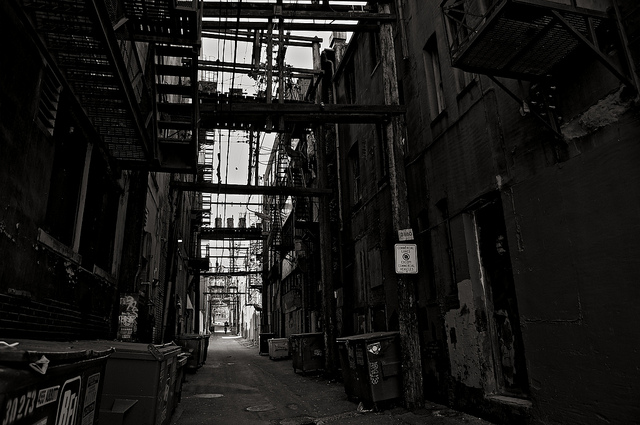
Whatever happened to old time gambling? The skeazy craps game is a classic fixture of a certain period of crime fiction – it seems as long as we’ve had alleys, we’ve had indigents hoping for a 7 or 11. I mean, dubious men tossing dice is a concept that goes at least all the way back to the Roman legion of the bible.
 Yet, these days, you don’t hear much about it. Maybe I’m just running with the wrong crowd, but it feels like sometime in the late-80s or early-90s, the on-the-street-casinos started to lose traction, at least in the popular consciousness.
So what happened?
Well, when the gin racket was run by criminals, the American government brought them down by simply legalizing and controlling the product. My suggestion is that we no longer have a large contingent of people tossing the bones because we’ve found new dim alleyways online.
Why pull on that heavy leather jacket and stand out in the cold when you can just as easily bilk a table full of grandmas from the comfort of your own home (or a public internet cafe)?
[youtube=http://www.youtube.com/watch?v=ZtmvvarZLwg]
Monday is almost here!

I must admit, I still feel a little like I’ve defused a bomb when I turn off an alarm system.
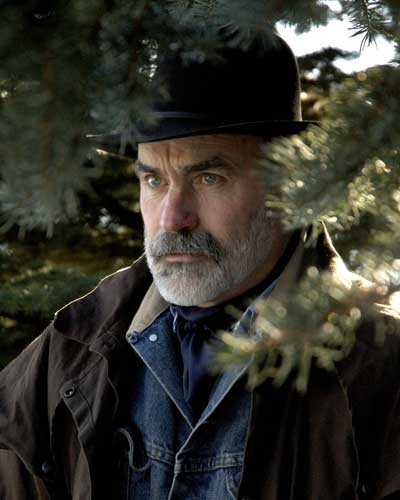 “Dude-finder” is my proposal for a much less intense version of “Mantracker”.
 Welcome to Flash Pulp, Episode Ninety-Nine.
Tonight we present Mulligan Smith and The Temple Of Ortru, Part 1 of 1
[audio:http://traffic.libsyn.com/skinner/FlashPulp099.mp3]Download MP3
(RSS / iTunes)
Have you ever wanted to stare longingly across the table at a beautiful re-creation of yourself?
The art of Mike Mongello can do that for you. Find out how at http://www.supermonge.com
Flash Pulp is an experiment in broadcasting fresh pulp stories in the modern age – three to ten minutes of fiction brought to you Monday, Wednesday and Friday evenings.
Tonight, Private Investigator Mulligan Smith must plumb the depths of the The Temple Of Ortru, in search of truth for a desperate client.
Flash Pulp 099 – Mulligan Smith and The Temple Of Ortru, Part 1 of 1
Written by J.R.D. Skinner
Art and Narration by Opopanax
and Audio produced by Jessica May
Mulligan entered the room just in time to watch the huddled men moan over their companion’s death.
Three weeks earlier he’d met with the victim’s wife over a cup of mid-afternoon coffee. She’d worn a simple blue dress, with quite a bit of gold tucked about her neck, and she’d obviously taken care in arranging her graying hair into a simple, but prim, bun.
“I don’t want to bring it up to him, just… just in case.”
“I think it’s a pretty extreme thing to imply your husband is in a cult, if you don’t mind me saying so.” Mulligan had taken a long sip from his cup after his response, paying as much attention to her body language as he’d paid to her story. Once, a few years earlier, he’d spent six days chasing ghosts for a man who’d claimed he was being threatened. It had taken his third visit to the client to realize the problem: that the only thing harassing him was a head full of bad wiring.
He’d only charged the man half his usual fees.
Still, the housewife didn’t seem crazy, just a little neurotic.
“I’ve heard him talking on his phone about.. things,” Mrs. Tuttle had replied.
“What kinds of things?” He’d taken up his phone, his thumb prepared to enter notes on anything that might be of use.
“Something about demon lords? Something about the Temple Of Ortru?” Her hand had shook as she’d picked up her mug. “He laughed a lot, and it sounded so vicious, so unlike him.”
“Has he been away from the home more often recently?”
“Well – he’s always spent Thursday night at O’Neil’s, downtown, but a few months ago things changed. He never told me he altered his plans or anything, and sometimes he’d still mention a story he’d heard from his drinking buddies, but his breath didn’t smell as beery as usual, and if I asked anything more about what happened, he’d just sort of change the subject. Now he just never mentions it at all.”
Mulligan had accepted the case, but he’d assumed that the truth of the matter was much more likely to involve the husband having an affair, while his wife utilized her overactive imagination to maintain her denial.
With that idea in mind, it was with some surprise that he’d noted Tuttle’s behaviour as the man was leaving his home on the following Thursday.
As the wayfaring husband, still wearing the suit he’d returned from work in, said his goodbyes, and exited the front door, he’d taken a moment to ensure his wife hadn’t decided to approach a window to see him off, then ducked into the house’s garage.
A moment later, he’d exited with a knapsack appearing thoroughly out of place strapped across his jacketed shoulders, and gotten into his cream coloured Cadillac.
Mulligan’s first attempt at tailing Tuttle had been a bust; he’d gotten hung up at a red light and was forced to watch his quarry turn a corner in the distance and disappear.
The second week had been much more successful, however, and the PI had happily jotted down the banquet of information represented by the license plates gathered in the driveway of the bungalow at which the chase had ended. What is kept private in the real world is often embraced online, and, via some favours and Google, Smith was quickly able to come to solid conclusions regarding his client’s husband’s evasiveness.
On the third week, after the caddy was safely empty an hour, and the entire cast of Mulligan’s previous visit had long entered the house, the detective had scooped his blue slurpee from the Tercel’s driver-side cup-holder and approached the door.
After a brief explanation, the squat, black-haired woman who’d answered his knock had shown him down a short hall at the rear of the house.
They’d found the men gathered there, their eyes afire with intensity and sweat on their brow.
“I was murdered! Bloody warlock.” said Tuttle, muttering from the far corner.
Mulligan noisily sucked at the remnants of his cup’s offerings, drawing the attention of the crowd.
He tipped his straw towards his prey.
“I’m not the kind of fellow to judge a grown man for playing Dungeons and Dragons, but, I think your wife has a right to know.”
Flash Pulp is presented by http://skinner.fm. The audio and text formats of Flash Pulp are released under the Canadian Creative Commons Attribution-Noncommercial 2.5 License.
Implication #3 for episode 100:

 George Of The Jungle is a cartoon show about a man wearing animal skins swinging around the jungle. The newest iteration, launched in 2007, has pulled in high enough ratings that they’ve been allowed more than one season, but the original, launched in 1967, ran only seventeen episodes.
So what?
Well, I have a theory. George, frankly, isn’t very good. It’s too ridiculous for older children, and is entirely devoid of the educational content that assuages parental guilt about letting a small child watch TV. Both versions of the show strike me as perfect examples of mediocre television, run only to fill time for kids being babysat by the glass teat.

One of the truly weird aspects of its continued existence is the fact that this generation isn’t even really all that familiar with Tarzan, which the series is a direct spoof of – there hasn’t been a major iteration of the ape man in over a decade, although I suppose they may be familiar with the Phil Collins-filled Disney version.
So why is it still on?
My theory is that it’s the theme song. The theme song is also what got the 1997 movie, starring Brendan Frasier, made.
How could a theme song have reached out from 37 years previous to get a major motion picture put together?
Well, it was this remake, as done by Weird Al in 1985. My belief is that Al, looking for material, reached back into his childhood years and pulled out the one redeeming item that had stuck with him from the original cartoon, the music.
[youtube=http://www.youtube.com/watch?v=VJDmkCDqzFU]
Maybe it was a young go-getter, maybe it was a studio exec with a kid constantly playing Weird Al, but at some point the licensing must have crossed some listener’s desk, and the spark of resurrection was born.
I realize it may sound crazy, but: how many people can honestly say they’ve seen Saturday Night Fever? How many people are familiar with it because of Stayin’ Alive (the song, not the sequel film)?
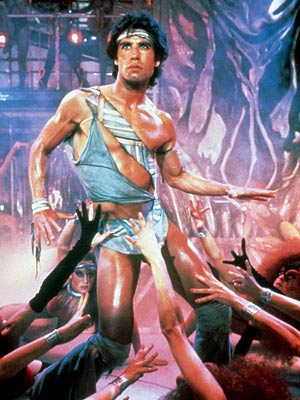
The original Shaft is another great example. A lot of folks know who is the man that would risk his neck for his brother man, but, when pressed on the details, they’ve got little info. Still, Samuel L. Jackson shafted us all out of admission fees in 2000.
Eye Of The Tiger got three or four more Rocky movies made, and the catchy Pink Panther theme launched an entire franchise separate from the Peter Sellers character.
I’m sure there are many missing examples, please feel free to chastise me with their titles in the comments.
 This suite101 page got me thinking about the American Thanksgiving – and its follow up pseudo-event, Black Friday – and how they’re an interesting combination of history and materialism.
Massachussetts authorized the first mint in British North America in 1652. The mint created silver coins. Some were stamped with NE for “New England” or had images of trees.
Of course, 1652 seems a little late in the game to be utilizing legal tender, so what did people do before that?
It wasn’t all just British coinage:
Wampum in Rhode Island was made from white whelk shells and purple quahog shells. The quahog shells were worth twice as much as the whelk shells in the Indian economy.
With gold and silver coins in short supply, the colonist agreed to accept the wampum as legal tender.
I love the romantic notion of using a naturally occurring resource as legal tender, but, to return to the first American mint as an example, ne’er-do-wells will often crop up.
[The silver coins] also became the first coins counterfeited in America. John duPlessis was convicted of counterfeiting these coins in 1674.
How bad was it?
In 1682, William Penn complained that he could not bring his ‘holy experiment’ in Pennsylvania to fruition when half the coinage in the colony was phony.
Yikes – so, maybe we should all head back to the naturalistic idea of trading shells?
It wasn’t long before the Indians realized that here was an opportunity to take advantage of the newcomers. They hoarded the valuable quahog shells for themselves, dyed the cheaper white shells a dark purplish black, then passed them off as the real thing to undiscerning Europeans.
If there’s a lesson here, I think it has something to do with high-end laser printers.
Happy Thanksgiving to my American friends!