Update
http://twitter.com/#!/JRDSkinner/status/61603300562317312
http://twitter.com/#!/JRDSkinner/status/61603300562317312
I was quite pleased to see podcaster, blogger, and man about twitter, @spiritualtramp, bring my name up over at The Nifty Tech Blog.
Today, I bring you one @JRDSkinner. I don’t know much about JRD as a person. I do know that he has a podcast called Flash Pulp that’s been running for over one hundred and fifty episodes and that takes a special kind of crazy. – read more
 I’m one of those people who believes in synthesizing folk-knowledge and science, but I’m also a firm believer in hearing out the voice of reason. That’s why I found this article in the Irish Times so interesting.
‘PLANTS HAVE been trying to kill us, not cure us,” says Dr Henry Oakeley, the garden fellow at London’s Royal College of Physicians.
Now, before you think this is some madman rambling on about The Day of the Triffids, hear him out.
Citing as an example the use of blue liverwort, Hepatica nobilis , once cultivated as a liver tonic because its three-lobed leaf form mirrored the shape of the liver, he says, “It was absolute rubbish. They had no idea how the body worked.
I once believed that herbal remedies were discerned on a trial and error basis – in some cases it’s true, but, in others…
In the 1880s, at the height of its popularity, those taking it to cure feelings of “liverishness” were stuck down by jaundice because the plant was in fact toxic to the liver.
I can almost envision a Victorian-era version of Anne Landers, or even Sanjay Gupta, utilizing their broadsheet column to espouse the value of Valentine’s candy boxes as protection against heart disease.

Oddly, the whole thing strikes me as very much in the same vein as the more modern popular wisdom regarding birds exploding after consuming wedding rice.
In a recent [1996] column, Landers warned readers that throwing rice at weddings is unhealthy for our feathered friends: “Please encourage the guests to throw rose petals instead of rice. Rice is not good for the birds.”
“This silly myth pops up periodically, and it is absolutely unfounded,” responded rice expert Mary Jo Cheesman at the USA Rice Federation. Many migrating ducks and geese depend on winter-flooded rice fields each year to fatten up and build strength for their return trek to northern nesting grounds.
– Snopes
– and, hopefully, I don’t need to remind anyone regarding the truth surrounding the once mythologized “Spanish Fly”.
Spanish fly, or cantharides as it is sometimes called, is often given to farm animals to incite them to mate. When ingested, preparations containing cantharides once excreted in the urine irritate the urethral passages, causing inflammation in the genitals and subsequent priapism […] cause[s] painful urination, fever, and sometimes bloody discharge. They can cause permanent damage to the kidneys and genitals.
The Irish Times article goes on to mention several herbs that do actually have medicinal applications, along with accompanying blurbs as to how they were discovered and observed to work. The lesson – as it is regarding many topics – is that research is an important step before jamming some odd bit of vegetation into your gullet.
Finally, the doctor closes with this great bit of foresight:
“I promise you, in 50 to 100 years’ time, people will be as rude about most of the medicines we take today as I am about peony root.”
(Dang – I’ve just discovered I’ve been scooped on this story by a posting at BoingBoing. My apologies to anyone who finds this all to be old news.)

Welcome to Flash Pulp, episode one hundred and fifty-five.

Tonight we present, The Murder Plague: Democracy, Part 1 of 3.
(Part 1 – Part 2 – Part 3)
[audio:http://traffic.libsyn.com/skinner/FlashPulp155.mp3]Download MP3
(RSS / iTunes)
This week’s episodes are brought to you by the Nutty Bites Podcast.
Find out more at http://nimlas.org!
Flash Pulp is an experiment in broadcasting fresh pulp stories in the modern age – three to ten minutes of fiction brought to you Monday, Wednesday and Friday evenings.
Tonight, Harm Carter explores the interior of a companion’s son’s home, while considering his future in a land brimming with homicide.
Flash Pulp 155 – The Murder Plague: Democracy, Part 1 of 3
Written by J.R.D. Skinner
Art and Narration by Opopanax
and Audio produced by Jessica May
 There’s not much in the way of conversation starting after you and some friends have abandoned a bound paranoiac-madwoman, even if she was sick and likely to murder the lot of you.
Still, I suspect the thoughts of the five of us remaining in the Escalade spun around the same few questions: when was she infected? How was she infected? Were we now infected too?
Well, maybe all minds except Jeremy’s. That boy rarely had anything on his mind beyond the interior of his pants and his own position in the world.
After an hour’s driving, he broke the silence.
“So, uh,” he said. As he spoke, I remember him undoing his seat-belt and lifting himself off the leather so he could tug at his over-sized t-shirt. I also remember wondering how he’d managed to wrangle the passenger-side spot. Old man Tyrone didn’t look terribly comfortable wedged in back, between the ladies, and I felt like a chauffeur to the trio – with the middle row missing, it seemed like they were sitting at the far end of a football field. I could only guess where the former owner had stashed the rogue bench, as peculiar objects often went missing during the time of Hitchcock’s. “We should nominate a leader. I think we all agree that, as the strongest dude here, I should probably be it.”
“This isn’t a game of schoolyard red rover,” I replied. “We don’t need a team captain.”
Two days prior my discharge from Uncle Sam’s marching penguins, I’d been directed to kill a sixteen-year-old looter. The sole person to issue me an order from then, till the plague, was Kate, and cancer ended that chain of command well before the young hooligan’s suggestion that he might elect himself as a tinpot President.
“My boy lives a half mile down from the next right-hand turn,” said Tyrone.
I have to give the codger credit for knowing when to change the subject. I wasn’t sure if he was telling the truth or not – it struck me as odd that he he hadn’t mentioned anything until we’d gotten so close, but, in retrospect, I can’t blame him for avoiding answers.
I rounded the corner.
The house had a big yard, slightly overgrown, and various children’s toys seemed to float on its surface, half-submerged in the greenery. There were no lights behind the windows of either floor.
“Don’t think anyone is home,” said Johanna.
Minnie cleared her throat.
“You guys can go poking around all you like, but I’m not going in. Leave me the keys, though.”
I killed the engine, watching Tyrone’s rheumy eyes in the mirror as he sized up the shadowy front-porch.
“OK then,” I said, “This decision is simple enough – we break into two groups: everyone going in, get out.”
There was a pause, during which nobody moved, then, for some bloody reason, I opened my door.
The real surprise came next, however. It was just me and Johanna.
“It’s really appreciated,” shouted Tyrone, from behind the glass.
I damned my mother for raising her son so well.
Johanna cocked an eyebrow, but said nothing. She did crack a bit of a smile when she noticed me dropping the Escalade’s starter into my pants-pocket.
What else was there to do?
We walked down the cobble-stone path that split from the driveway and took the double tread up onto the welcome mat. Out of sight of the rest of the group, my companion snuck a flip of her flask, then offered me some of the same.
It was tempting, but I declined. As she raised another tipple, I alternated between the brass knocker and the buzzer. No one responded.
Tucking away her thirst, Johanna tried the lock and found no resistance. I followed her inside.
Across from the entry, sitting on a buffet below the flight of steps leading to the second floor, was an ancient answering machine. The only source of light in the room was the digital counter, which was blinking five. I would rather have avoided it, but, while I was still fumbling for a switch, she hit the barely visible play button.
The device gave a few metallic clicks, then started talking.
“Paul, Maggie,” said Tyrone’s voice. “It’s, uh, Tuesday, 9AM. I’m not liking the looks of the neighbourhood. Your dear old dad is coming to visit. See you soon.”
As it was a Tuesday, the communique must have been at least a week old.
There was a flat beep, then a woman’s suburbanite mutter. As she spoke, I managed to locate a row of dimmers and flooded the entrance area – which included the living room to the left and the kitchen to the right – with illumination.
There was a fat dead dog at the bottom of the stairs.
“Hi,” said the machine. It sounded as if she were calling from a moving vehicle. “Nick was telling me about the birthday invitation you guys sent last week. I’ve just got a few quick questions, if you could give me a call back.”
She left her number, but my memory isn’t as reliable as a cassette tape.
We went around the couch, ignoring the tidy stack of magazines and remotes on the coffee table at its center.
There was a large fireplace beside the flatscreen, so I picked up a poker, and Johanna followed my lead by grabbing a solid metal ash-pan. There wasn’t much else of interest, nor in the little office that adjoined the space, nor in the dining room that lead off of that.
The litany of missed calls continued.
“It’s pretty rude not to give some simple answers,” opened the third message. “Nick is, uh, really upset that he doesn’t know what’s going on. You better call me.”
Our exploration brought us to the kitchen’s other access, and our path at that point inevitably lead back to the canine cadaver. It looked in rough shape. It’s dark brown fur contained streaks of dried blood, but the thick coat also hid the exact nature of its injuries from view. Fortunately, it didn’t smell terribly rotten yet.
I spent a moment guessing if Tyrone would be offended at my idea of using one of the canvas grocery bags, which were hanging on a hook beside the pearly white microwave, to collect up some canned goods.
The box gave another beep.
“Listen to me. I’ve driven by your house twice now, and I can see you moving inside. ANSWER MY CALLS.”
I decided to skip the pillaging and move directly to the second floor. Keeping my eyes firmly on my feet, I took the steps two at a time. Johanna was right beside me, close enough that I could tell it was rye she’d been drinking, and we moved in unison.
Neither of us made it beyond the baby gate which barred the opening to the upper hallway.
There was a lot of someone, or someones, spread around the carpet.
“Beep,” announced the phone-minder.
“I’m coming over,” said the woman. Then she hung up with a clunk.
“Why did she kill the dog too?” asked Johanna, as we made our way back onto the porch.
“She didn’t,” I told her. “The mutt’s what made the mess. Poor pooch probably hid under a bed while it was happening. Then, days later, once there was nothing usable left to eat, it must have tried to jump the gate, breaking its neck in the process.”
Before climbing into the vehicle, we agreed to tell Tyrone the house was empty.
Flash Pulp is presented by http://skinner.fm, and is released under the Canadian Creative Commons Attribution-Noncommercial 2.5 License.
Text and audio commentaries can be sent to skinner@skinner.fm, or the voicemail line at (206) 338-2792 – but be aware that it may appear in the FlashCast.
– and thanks to you, for reading. If you enjoyed the story, tell your friends.
 |
 |
 |

|
(Mouse-over for episode titles, click to read/listen. Blog content begins below.)
Don’t forget to subscribe via iTunes to get the episodes hot off the mic!
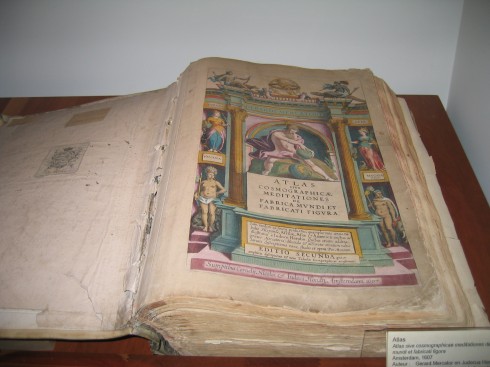
I have little to add, I just thought this was a neat bit of word-history:
Atlas:
“collection of maps in a volume,” 1636, first in reference to the English translation of “Atlas, sive cosmographicae meditationes de fabrica mundi” (1585) by Flemish geographer Gerhardus Mercator (1512-1594), who might have been the first to use this word in this way. A picture of the Titan Atlas holding up the world appeared on the frontispiece of this and other early map collections.
 [audio:http://traffic.libsyn.com/skinner/FlashCast016.mp3](Download/iTunes)
Hello, and welcome to FlashCast episode sixteen – prepare yourself for remakes, Viennese legends, Kar’Wick, and schmucks.
Mentions this episode:
* * *
If you have comments, questions or suggestions, you can find us at https://flashpulp.com, call our voicemail line at (206) 338-2792, or email us text or mp3s to skinner@skinner.fm.
FlashCast is released under the Canadian Creative Commons Attribution-Noncommercial 2.5 License.
 Despite my peace-loving ways, I tend to spend more time than I should considering the future of war.
Do you recall the scene from 2001: A Space Odyssey, in which the monolith-touching ape realizes he might smash bone if he utilizes a femur as a club? Combat is still all about tool use, and the more advanced the bludgeon, the more likely the victory.
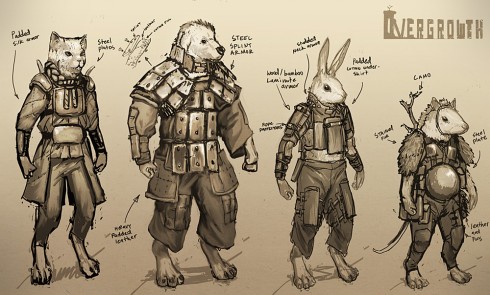
Centuries ago, those who could afford chain-mail outlived those who had only leather. Eventually, however, those who could muster a suit of plate-armour laughed mockingly at the poor schmucks who could only obtain a suit of chain – the chortling ceased with the inception of gunpowder.
I don’t need to run through each technological turn, but it’s obvious that the links lead us straight down the line to automatic rifles and fighter jets.
[youtube_sc url=”http://www.youtube.com/watch?v=LKyf8MGnNM0″]
There’s something almost tender about the slow, questing, feet of this Chinese robot known as FROG-1. It feels, to me at least, like watching a lion cub take its first steps, and nevermind that it’s likely the future of applied death-dealing.
Obviously inspired by Boston Dynamics’ Big Dog, the knock-off still has a long way to go before being a threat on the battlefield, but it’s certainly coming – and, as go the superpowers, so too the world. We need no more evidence of that than the proliferation of nuclear weapons.
Our ancestors used to speak of swords being converted to ploughshares, and there’s no doubt that this technology will have some fantastic civilian uses – but the truth is, the adage once operated in both directions: in a time of war, the local blacksmith could just as easily form weapons from that which once provided food.
What will we do, if it comes down to it? Entrust the local TV repairman to assemble a defense from plasma flat-screens and abandoned VCRs?
Wow, what a difference 24 straight hours of complaining, followed by 24 straight hours of sleep, can make. My illness has retreated to nothing more than a persistent sniffle, and my brain is happily being primed under a steady deluge of coffee.
Tonight we’ll be recording and posting FlashCast 16, and tomorrow we’ll get back on track by releasing the first of a Murder Plague three-parter.
I’ll update the weekly schedule shortly, but, at the moment, it appears the site has picked up a gremlin, and is now tweeting non-existent updates to my feed. Frankly, I’m just pleased to be in a healthy enough condition to do something about it – now please excuse me while I locate my bludgeoning wrench.
[youtube_sc url=http://www.youtube.com/watch?v=xos2MnVxe-c]
