A Tank-less Job

Reader Jeff Pyrotek left me a comment on Facebook, admonishing me for my lack of info on Russian anti-tank dogs in the last post.

Frankly, it was because I’d never heard of them.

All quotes are from the wikipedia

They were intensively trained by the Soviet and Russian military forces between 1930 and 1996 and used in 1941–1942 against German tanks in World War II. Although the original dog training routine was to leave the bomb and retreat so that the bomb would be detonated by the timer, this routine failed and was replaced by an impact detonation procedure which killed the dog in the process.

How do you train a dog to destroy a tank?

First, you deny it dinner.

Dogs were trained by being kept hungry and their food was placed under tanks.

Unfortunately, a lack of nutrition was the least of the canines’ problems. Unlike the relatively lucky American mutts, these pooches were expendable.

Their deployment revealed some serious problems. In order to save fuel and ammunition, dogs had been trained on tanks which stood still and did not fire their guns. In the field, the dogs refused to dive under moving tanks. Some persistent dogs ran near the tanks, waiting for them to stop but were shot in the process. Gunfire from the tanks scared away many of the dogs.

[…]

Another serious training mistake was later revealed; the Soviets used their own diesel-engine tanks to train the dogs rather than German tanks which had gasoline engines. As the dogs relied on their acute sense of smell, the dogs sought out familiar Soviet tanks instead of strange-smelling German tanks.

Dogged

Dogs In A RowSpeaking of what you might do for your government, I meant to post up this little nugget regarding war dogs yesterday, but got side-tracked.

From the wikipedia:

1943–1945: The United States Marine Corps used dogs, donated by their American owners, in the Pacific theater to help take islands back from Japanese occupying forces. During this period the Doberman Pinscher became the official dog of the U.S.M.C.; however, all breeds of dogs were eligible to train to be “war dogs of the Pacific”.

These dogs were accepted into service after being ‘volunteered’ by their human caretakers, or, if the movie Courage Of Lassie is to be believed, after being found stray.

A “basic training” period was initiated where dogs were trained to carry out certain fundamental commands such as sit, stay, come, etc… They were also accustomed to muzzles, gas masks, riding in military vehicles and to gunfire. – qmfound.com

After basic training, the dogs would specialize in a specific task, usually scout or guard duty, although occasionally in being messengers or mine-detectors.

The scout dog and his Quartermaster handler normally walked point on combat patrols, well in front of the infantry patrol. Scout dogs could often detect the presence of the enemy at distances up to 1,000 yards, long before men became aware of them. When a scout dog alerted to the enemy it would stiffen its body, raise its hackles, pricking his ears and holding its tail rigid. The presence of the dogs with patrols greatly lessened the danger of ambush and tended to boost the morale of the soldiers. – qmfound.com

Lessen the dangers of ambush, possibly, but not entirely negate them. I couldn’t find a casualty count for canine combatants during WWII, but I imagine being specifically used as the method of determining first contact would lead to quite a number of close encounters.LIFE War Dog

At the end of the war the Quartermaster Corps put into operation a plan for return of war dogs to their civilian owners. Dogs were sent to a reprocessing section for the purpose of rehabilitation for civilian life. Dogs were trained that every human was friendly and tested for such things as reaction to people riding around them on bicycles or placed in an area with a great amount of noise. Before return, each dog was given a final check by a veterinary officer. Shipment of the dog to the owner was made at government expense. Those dogs which the original owner did not desire were sold to the public by the Treasury Department with the assistance of Dogs for Defense. By early 1947 the return of all borrowed dogs was completed. – qmfound.com

Which almost seems like a more careful and tender-handed release process than most modern human soliders get these days.

The wikipedia:

Of the 549 dogs that returned from the war, only 4 could not be detrained and returned to civilian life.

Were these four dogs put down – or were they the start of a secret, elite K9 combat unit?
Pfc. Rez P. Hester, 7th War Dog Platoon, 25th Regt., takes a nap while Butch, his war dog, stands guard.  Iwo Jima, February 1945.  S.Sgt. M. Kauffman.

Prediction

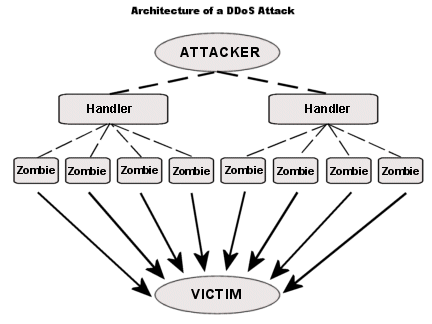
Distributed denial of service attacks are the current weapon of choice for internet combat.
Found at http://www.cs3-inc.com/pk_whatisddos.html
You may have heard about MasterCard, etc., being taken down in recent weeks by pro-Wikileaks agitators, all via the use of virus-laden zombie computers – the same technique was used during the Russo-Georgian fighting in 2008, and in July 2009 Chinese and North Korean originating botnets attacked South Korean and American sites.

The reason I bring it up: I have a prediction.

It seems obvious that the next major conflict between modernized nations will include an escalation in these tactics, and at some point it’s going to be necessary to move beyond illegal rafts of infected DELLs.

In the same way that we were once asked to grow Victory gardens, or buy war bonds, at some point the government may ask you to install an app.

It may run as a screen saver, or it may simply sit in your computer’s taskbar – but in those quiet moments, when you’re not surfing ebay, or critiquing the photography of friends and family on Facebook, your computer will be marching with its brethren, readying packets of digital-blades with which to shiv foreign servers in the dark alleys of cyberspace.
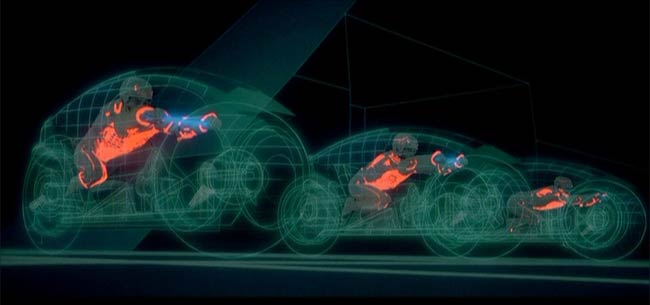
Tron

Flash Pulp Scheduling

Flash PulpI had such beautiful plans in my heart – a week off of work-makes-food to allow me to finally build a buffer and get ahead.

Then this happened (well, figuratively):

[youtube=http://www.youtube.com/watch?v=V8Ca_edg6RE]

While I’m actually beginning to feel better, our dearest Jessica May, audio producer extraordinaire, is now down with the same bug, and I have a sneaking suspicion that Opop may be next.

So, here’s the plan: blogging resumes as normal from here on out, but Flash Pulp and FlashCast will begin afresh next week. I’m going to pound the word-keys furiously in the meantime, and hopefully I’ll have magic to unveil come Monday.

(I actually suggested dragging the mic to Jessica’s sick bed, to do an episode of FlashCast, but she shook a fist at me and cursed me with something that was either a long dead language or a throat brimming with phlegm.)

We appreciate your patience in this time of zombification.

Sick Call

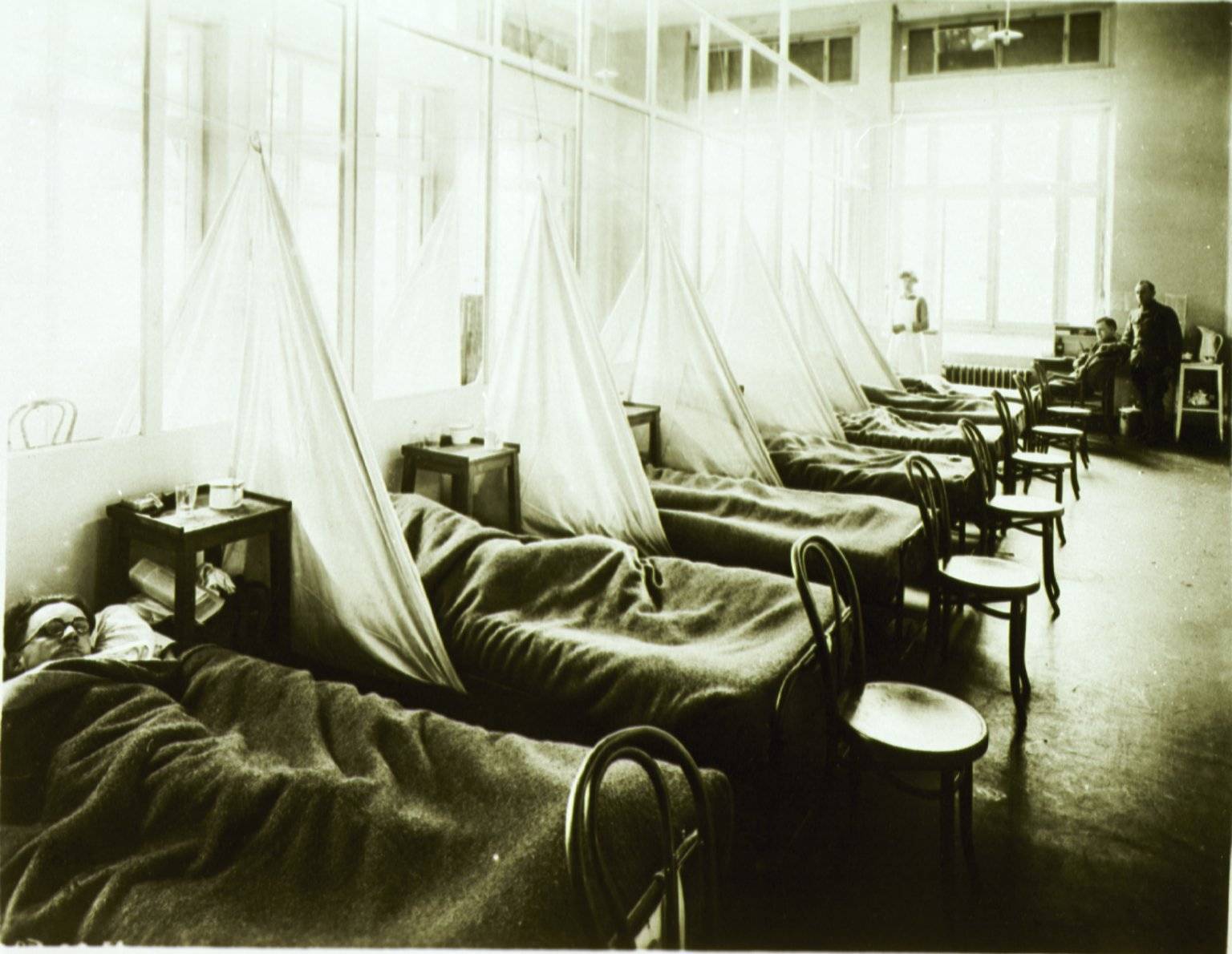
Flu HospiceThis flu got me thinking about how much I actually knew regarding the Spanish Influenza of 1918. We’ve discussed before the fact that troop movements and the nature of modern warfare went a long way towards spreading the bug globally, but I was surprised to discover this little factoid:

Although the first cases were registered in the continental U.S. and the rest of Europe long before getting to Spain, the 1918 pandemic received its nickname “Spanish flu” because Spain, a neutral country in WWI, had no censorship of news regarding the disease and its consequences. – wikipedia

So – if this illness I’m recovering from ever goes global, we may be calling it The Wikileaks Flu?

Extreme measures were implemented to prevent further spread:

“In some communities, it was a criminal offence to shake hands. Gatherings of more than six people were banned.” – CBC

Keeping apart gatherings of six must have also been difficult given that the average American family size was 4.9 people; and, of course, that put the usual places of comfort – hospitals, theaters and churches – out of bounds.

From the Stanford website:

With one-quarter of the US and one-fifth of the world infected with the influenza, it was impossible to escape from the illness. Even President Woodrow Wilson suffered from the flu in early 1919 while negotiating the crucial treaty of Versailles to end the World War.

I’ll close this little random walk through plague-town with a children’s rhyme I came across on that same page:

I had a little bird,
Its name was Enza.
I opened the window,
And in-flu-enza.

Quick Change

My brain has slowly but surely come back online. This has been one of those illnesses you only encounter a few times in your life – the kind of sick that makes it a signpost in your chronology. This has been the type of desperate expulsion of bodily fluids that you stamp a year on: The Spanish Black Plague Influenza of 2010.

By the way – did you know that James Cagney got his start as a female impersonator?

Born to a lower class family in 1899, young Jimmy would take on a host of odd jobs to help make ends meet, including his first foray into performing, just after WWI, when he worked as a female impersonator. – Things And Other Stuff

A Thousand Points Of Light For Mr Blog's Tepid Ride

Today we present the last in our series of delvings into BMJ2k’s archives, from Mr Blog’s Tepid Ride.

I’d like to take a moment to thank Barry for giving me access to his repository of hilarity, and doubly so for having these on tap just as my body apparently got caught up with some sort of Spanish Influenza/Black Death hybrid.
Mr Blog's Tepid Ride

SO YOU WANT TO BE AN ASTRONAUT – a primer

I have been interested in space exploration since July 8th, 1978. That day my uncle Buzz Yeager Jacobs took me to NASA to show me where he works. Uncle Buzz was an astronaut, and he took me behind the scenes of both the Johnson Space Center and Jet Propulsion Laboratories. I got to wear a spacesuit, I walked on their simulated moon environment, and I was even blasted into near-Earth orbit when I stowed away in the payload of a Gemini 6 rocket. I came back with only a few ill effects, but I was kept in quarantine for a week because of exposure to cosmic radiation due to poor shielding in the cargo compartment. To this day I still yell “Flame on!” in times of extreme stress.

Since then, I have taken an interest in space travel and have now taken it upon myself to write this primer for you, the aspiring astronaut-to-be.

PART ONE- So You Want To Be An Astronaut.

It’s not easy becoming a member of the elite space corps. Buzz Yeager Jacobs was an air force test pilot for 25 years and flunked out of flight school twice before he was accepted for astronaut training. They don’t take just anyone. Lindsay Lohan, for example, cannot be an astronaut, no matter how much we would all like to blast her into space.

Astronauts go through rigorous training, both physical and mental. They must be able to withstand the enormous physical trauma of space flight- the high gravitational forces on takeoff and reentry followed by no gravity and weightlessness. Mentally, the stress is even harder. Ever see the Bugs Bunny cartoon where he stacks a dozen cases of dynamite on top of each other and lights the fuse, blowing up poor Elmer Fudd who was tied to the top? Well, that is space flight in a nutshell, and every astronaut knows it.

But if you have “the right stuff” you can be an astronaut. What is “the right stuff?” I don’t know but they have it. And if you have it, this primer is for you.

PART TWO – Space

Space is a very big place, and there is relatively little in it. Let me give you an example: Space is even emptier than Paris Hilton’s head. “That’s hot.” (No, Paris. In fact, space is very very cold.)

Before space flight, scientists believed that space was very crowded with a substance called “ether.” They could not see it or measure it, but they believed it was there nonetheless. Those early scientists were pretty stupid. (Or pretty religious, if you replace the word “ether” with the word “God.”)

Today we know that space is a vacuum which spans a distance many trillions of light-years across. What is a light-year? It is defined as the distance a ray of light will travel in a year. In terms of miles, it is a quazillion-billion-doodad miles, a long way in anybody’s book.

PART THREE – Objects Found In Space

Despite the relative emptiness, there are things in space which can kill you.

1- There is no air in space. If you ever find yourself going there, remember to pack some oxygen or you’ll have a very short visit.

2- Asteroids. These are also called “comets” or “meteorites,” depending on how accurate the movie you are watching is. Asteroids are 70% ice, 10% rock, and 20% anger. They exist to smash into planets and kill dinosaurs. This is what happened on Earth. An angry asteroid smashed into the planet and sent a giant cloud of dust into the air, blocking all sunlight, killing most plants, choking most oceans, and forcing the large animals that depended on plants and oceans to die. (No, no, Mr. Gore, I am not talking about your “Inconvenient Truth.” This is factual.) If you ever played the old video game “Asteroids” on the Atari 2600 you know how dangerous these objects can be.

3- There are a great number of planets in space, but only a fraction of them are thought possible of sustaining human life. According to Abbott and Costello go to Mars, the planet Venus is populated by a race of beauty pageant contestants who have never seen a man. (And one giant dog.) Since this movie’s release in the early 1950’s NASA has made a Venusian colony a top priority.

4- The sun. Look into the dawn sky. The big yellow one’s the sun. But don’t look directly at it! (I should have warned you first. Sorry.) It is a very hot environment. Don’t go there.

PART FOUR – Aliens

The official government position is that there is no life in space. We know that is untrue. Look no further than Tom Cruise.

Tom Cruise is a Scientologist. Scientology is a science-fiction-based religion founded by science-fiction writer L. Ron Hubbard and its main tenets can be found in his science-fiction novels. And Tom Cruise is an actor. Since when has Hollywood been wrong about anything?

Scientology believes that Earth is an intergalactic prison and that problems on Earth are caused by evil aliens. Lost your job? Drink too much? It is the aliens fault. Scientologists also believe that one day the Evil Alien Dictator will return to destroy the Earth. That is why Tom Cruise has green-lighted Mission: Impossible 4- while there is still time.

You may run into these aliens as you travel through space. You may also run into Klingons, Vorlons, or Marvin the Martians, all of whom will have a better ship and cooler uniforms than you do.

PART FIVE – So You Still Want To Be An Astronaut

After reading this primer, many of you may still want to become astronauts. Good for you, junior space cadets!

Being an astronaut is one of the noblest callings of humanity. A man may be chosen Pope, a woman may experience the joy of motherhood, but only an astronaut can spend four hours on the launch pad only to have a couple of clouds and a seagull scrub the launch.

To you, Astronaut-To-Be, I say clear skies and happy trails! I salute you.

Flash Pulp 111 – Marked, Part 1 of 1

Welcome to Flash Pulp, episode one hundred and eleven.

Flash Pulp

Tonight we present Marked, Part 1 of 1
[audio:http://traffic.libsyn.com/skinner/FlashPulp111.mp3]Download MP3
(RSS / iTunes)


This week’s episodes are brought to you by the the new Nutty Bites Podcast

Flash Pulp is an experiment in broadcasting fresh pulp stories in the modern age – three to ten minutes of fiction brought to you Monday, Wednesday and Friday evenings.

Tonight, we present a tale of priorities, misunderstandings, and apocalypse.


Flash Pulp 111 – Marked, Part 1 of 1

Written by J.R.D. Skinner
Art and Narration by Opopanax
and Audio produced by Jessica May


When Emmett Mender entered the world, his grandmother, on his father’s side, was the only one in the waiting room to raise an eyebrow at the oddly shaped birthmark on the back of his right hand. Carolyn, Emmett’s mother, had suffered a long and difficult pregnancy, and so it was to both parents that the blemish seemed nothing when measured against the joy of a successful delivery.

Still, as proud father Michael paraded the freshly scrubbed newborn through the room, there had been that gray and bushy eyebrow, askew.

Emmett’s childhood brought on the occasional misadventure: he broke an arm at ten, while climbing a neighbours apple tree to pilfer some of their harvest, and he’d once been caught with an unpaid-for chocolate bar in his sweater’s front pocket while departing a 7-Eleven. Otherwise, his youth was quiet, and the pleased parents found him an affectionate boy.

Despite the happy times, Michael began to notice an increasing change in his own Mother. She’d always been a sweet woman, but Grandmother Mender’s tongue had recently become sharp, and most especially in the presence of her grandchild. She made no secret that she considered his chocolate theft a life-long stain for him to prove against. Her church attendance tripled in fervor as well, although she seemed to have little patience for the mercy that was preached there.

Two weeks after his fourteenth birthday, Emmett refused to accompany his parents to their weekly Sunday dinner at his grandparents, stating that he had no interest in spending more time re-listening to the litany of complaints that always seemed to flow from his grandmother’s mouth as soon as he breached the door.

It was only three days later that Grandma Mender collapsed, convulsing; a day after that she was diagnosed as having a terminal cancer invading her nervous system.

Emmett attempted to visit while she was in the hospital, but he did not find any closure in the trips, as the old woman was deeply unconscious throughout. He decided instead to try reconciliation with his grandfather.

“I know things haven’t always been great, but -” was as far as he’d gotten before the old man had laid his leathery palm heavily across the boy’s face.

“This is your fault,” as well as the slap, was the only reply he would get.

No one could have known it at the time, but Grandfather Mender’s breakdown had begun the moment he’d watched his wife tumble sideways to the floor. She’d been interrupted mid-sentence, and the complaint she’d been voicing regarding her hooligan grandson would never be completed.

The disease worked quickly, and within a month the family was gathered about her grave, weeping and mourning – all but Emmett, who’d been told by his father that it might be best if he were to remain home.

While Carolyn and Michael often attempted to play-down his grandfather’s implications, the burden was a heavy one for the teenager to carry, and he began to ease his load with the assistance of the varied spirits he found in his parent’s liquor cabinet.

As soon as the casket was out of sight, Grandfather Mender had taken up his wife’s pious scheduling. He spent most waking hours in the Lord’s house, tending the fires he would then unleash at the continued Sunday meals. Not a week went by in which he did not berate son and daughter-in-law regarding the significance of the mark that adorned Emmett’s hand.

It was Michael’s encouragement that brought about the final meeting; he had no way of knowing how badly his father’s psyche had shattered. To work up his courage Emmett had secretly spent the morning sipping at a flask of vodka, and, by the time he arrived at his grandfather’s table, his tongue had worked itself into belligerence.

The old man was quick in accusing him of being a work of Lucifer, and the boy’s expletive-laden reply did little to prove otherwise.

“Lord, aid me!” the old man shouted, leaping across the serving dishes with his steak knife in hand.

He would never fully clear the over-cooked roast, however. The table began to buck under him, and the beams of his aging home groaned at the birthing strain of the forgotten deity, Kar’Wick. In the end, all would know the same fate, in the shadow of the Spider-God’s gnarled carapace.


Flash Pulp is presented by http://skinner.fm. The audio and text formats of Flash Pulp are released under the Canadian Creative Commons Attribution-Noncommercial 2.5 License.

Friday's Episode

My writing notebookWell, I’m ambulating a little more freely around the house now, largely carried on a cloud of high-powered medicine.

In theory this means that we’ll be able to post Friday’s episode tonight, but I’m not so sure about the FlashCast; my throat sounds like a suped-up Honda Civic drowning in a swamp.

Side note
One possible use for a bad case of the cold-sweats: get a long sheet of vinyl and, blam, you’re a DIY Slip ‘N Slide.