Slam
I’m fairly sure that life with a two year old is a pretty good simulation of life with a poltergeist.
I’m fairly sure that life with a two year old is a pretty good simulation of life with a poltergeist.
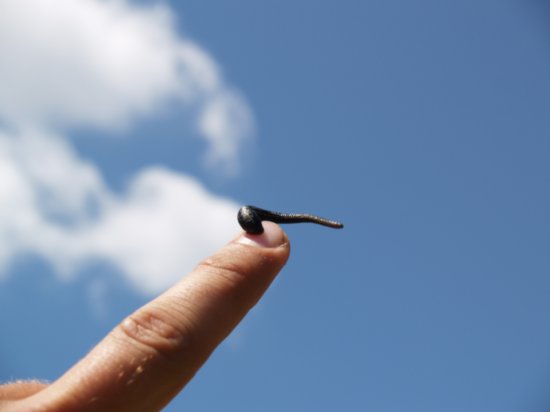 Speaking of things that are horrible – I had this idea pop into my head the other day, and I have yet to find some sort of use for it: Sky Leeches.
Swarms of buzzing sky leeches settling upon the land; clouds of them laying waste to cattle and poultry; black, sloppy hives hanging from eavestroughs.
Their natural predators? Possibly Air Pirates or The Great Polynesian Winged Turtle.
A quick thought I had in the middle of last night, which I figured was still worth sharing come the morning:
You know what’s horrible? Something giggling and crawling at you in the dark.
Why do we even have babies?
 Welcome to Flash Pulp, Episode Seventy-Two.
Tonight, we present The Affair Of Honour: A Blackhall Tale, Part 1 of 1
[audio:http://traffic.libsyn.com/skinner/FlashPulp072.mp3]Download MP3
(RSS / iTunes)
This week’s episodes are brought to you by the ranting of Captain Pigheart.
Rather than listen to our pale imitation, why not try a free sampling of the Captain’s work for yourself?
Buy the tales, as told by the Captain himself at CD Baby.
Flash Pulp is an experiment in broadcasting fresh pulp stories in the modern age – three to ten minutes of fiction brought to you Monday, Wednesday and Friday evenings.
Tonight we present a story of honour, risk, and single combat.
Flash Pulp 072 – The Affair Of Honour: A Blackhall Tale
Written by J.R.D. Skinner
Art and Narration by Opopanax
and Audio produced by Jessica May
At the age of ten, Thomas Blackhall was witness to his first duel. His understanding of the matter was minimal, but Theodore Ashton, a long time friend of his father’s, had asked the senior Blackhall to act as his second, and so it was that Thomas happened to overhear of the farmer’s field, not far from his own home, that was to be the site of resolution.
Creeping through the tall summer grasses, he came to the edge of a clearing in which stood four men. His father and Theodore Ashton were immediately recognizable, but he had no knowledge of their opposition. The man who would be fired against was young and lean, and stood a good six inches taller than Ashton. It seemed to Thomas’ youthful eye that this would give his father’s friend an advantage in aim.
The stranger’s second was a rotund gaffer, the face of which had grown red with anxiety and sun, who fussed ceaselessly until told to stop by the man demanding satisfaction.
The wind was at the boy’s back, and he could not hear the words exchanged between the gathered – the marking of distance, and preparation of pistols, however, was clear enough.
There was a moment when all was hushed, then came the shooting – a crack and flare from Ashton’s weapon, and, on its heels, the echo of the challenger’s.
For a moment the youth thought the encounter at an end. He was sure Ashton’s ball had flown true, and that the stranger was done in, but after a moment the tall man smiled and insisted on sending forward his second to converse with Thomas’ father.
The large man was animated in his commentary, and the elder Blackhall seemed displeased as he returned to speak with his friend.
The pistols were once again loaded.
The second volley seemed to come with less anticipation. The order of fire was again repeated, although the challenger seemed to pause this time, taking closer aim before discharging.
Seeing Ashton tumble sideways to the ground, and the still standing form of the tall man, young Blackhall moved from his hiding spot, his legs pounding homeward.
Once he’d wiped clean his tears and ventured to the supper table, he learned that his father’s companion had not perished, but instead was simply wounded. It would be a long year before the duelist might regain the use of his arm, but Thomas was happy to know the man had not been slain.
* * *
The second duel to which Thomas was privy took place many years later, as he ventured through the western districts of Upper Canada.
At this event, he was far from the sole spectator. The demand had been well heeded by all who’d been astride the General Brock’s hard wooden stools, and no few of the grogs-men had turned out to see Paul Melnor, a half-pay officer with a well known reputation for his embittered temper, challenged by a vagabond, who the locals referred to only as Ludwig.
Blackhall had not been on hand for the issuance, but, having awoken early to the Brock’s morning gossip, he’d found himself making his way, on empty belly, to the designated field.
The air was chill, and the morning dew soaked the feet of all who’d assembled.
Thomas knew none of the expectant faces personally, although he had some passing acquaintance with the half-pay officer from his short time at the Brock, but it was none of the residents who caught his eye. Melnor’s challenger was a lean man, of some half-remembered familiarity, and the frontiersman set himself to taking a closer look.
He’d grizzled since Blackhall had first seen him, but his inspection left little doubt that it was the same duelist who’d done injury to his father’s friend many years previous.
Despite his increased age, Ludwig seemed limber and full of vigour. Upon the hour of their engagement, his face broke into a smile.
 The first shot was Melnor’s, and well placed. Blackhall clearly saw the spreading crimson upon the tall man’s chest, and Thomas was sure it was the aging stranger’s turn to topple. After a moment, however, Ludwig seemed to collect himself, despite the neat hole in his waistcoat.
Raising his pistol, the challenger took careful aim.
The next day the local newsman would not report it as the result of a duel, but as that of an execution; there was little else to call Ludwig’s deliberation in the murder of his foe. The crowd did little but watch as he soon after sauntered to the edge of the throng, accepted a billfold which represented the winnings of the contested card game, and disappeared into the tree line.
Despite their conjecture that the man would soon be seen at the home of the local physician, the people of the town would not look upon Ludwig’s face again.
* * *
Blackhall had prepared himself for his final encounter with the lean man.
He’d long since moved further westward, well passed the settled reaches of the King’s land, into the primeval forest dotted only by the occasional farmstead or palisade of the People of the Longhouse.
It was a year since he’d observed the duel between Melnor and Ludwig, and much had happened in the interim – Thomas had come into the area following a trail of butchery, both of the aboriginals and the European farmers and trappers who’d braved the frontier. The murders had been cruel, and the sites of their perpetration were soaked with scarlet.
He came upon the third set of duelists under the clean sun of midday, in a small meadow. Ludwig had appeared without mount, but his opponent had tied off a well-packed mule along the edge of the clearing. This newest foe seemed to have little stomach for the challenge; Thomas could see the tremors in his hand even at his distance, and the man’s face seemed a mix of sorrow and concern.
Blackhall knew the supposed act of honour to be little more than robbery.
Both men had counted their distance and readied their weapons; shot would soon fill the air.
Thomas intercepted the process with a bellow.
Thinking his opposition to have fired early, the shaken man fainted, his weapon falling, unfired, from his grasp.
Ludwig turned to meet the interloper.
“I’ve been following you for some time now,” Blackhall stated flatly.
“Have you?” Ludwig responded, his face twisting into the same smile he’d worn on the day of Paul Melnor’s murder.
“I’ve come to stand as this man’s second.” Thomas said, carefully pulling the man’s limp body to a position of rest under the shade of a maple tree.
“Will you utilize his pistol?” Ludwig questioned.
“I’d rather my rifle, despite the disadvantages in speed that it presents,” Blackhall responded.
“I leave the choice to you.”
The two men faced each other then, and, as a single raven broke from the trees to take flight, both raised their weapons as if to fire. Ludwig’s arm far out-sped Thomas’, but it was Blackhall who fired first.
He’d been sure that the tall stranger would await the opportunity of a careful response; his greatest fear had been that the silver ball he’d cast would shatter under the force of firing, but, as Ludwig’s body fell to the earth, it twisted briefly into a form that was both man and wolf, proving his concerns unfounded.
It was tiring work, but Blackhall had all but finished digging the lycanthrope’s grave even before the lean corpse’s penultimate challenger had fully awoken from his swoon.
Flash Pulp is presented by http://skinner.fm. The audio and text formats of Flash Pulp are released under the Canadian Creative Commons Attribution-Noncommercial 2.5 License.
Last night my brain was assaulted by a commercial for THIS:
[youtube=http://www.youtube.com/watch?v=70lwALlvTx8]
I wrote about the original Underground Comedy Movie some time ago, while attempting to figure out what the deal with the Slap Chop Guy’s name was, but I never would have guessed that Vince Offer would throw his Sham-Wow money behind attempting a second stab at his real dream, acting. 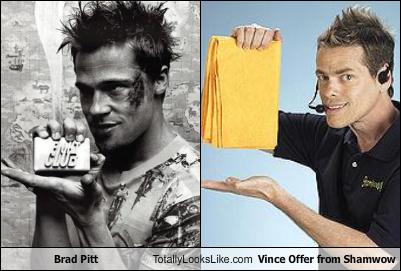 For those who don’t recall, we’re talking about a fellow whose original effort at breaking into the movie business was so bad that he ended up selling it himself via late night infomercials; it’s actually how he got into the business of selling garbage no one needs.
 I would love to show you a youtube clip of the original Underground Comedy, just to demonstrate how drab and soul-sucking it was, but Vince has had every scrap of it removed from the usual public video feeds.
– including the trailer.
[youtube=http://www.youtube.com/watch?v=Hek2KQcD8_M]
So, I was listening to Danny Barker’s version of St. James Infirmary the other day, and I once again came across the line regarding “The Gown Man”, which had previously sparked my interest.
And sure enough my poor dead baby was still laying there with a sheet over her head
(she looked like a gown-man)
After a little google-action, I found this:
The gown man was a bogey man like creature that was talked of in the New Orleans African American community in the early part of the 20th century. He was a white man in some sort of white robes who would snatch you to dissect your body. The tale supposedly arose from avid medical students at Charity Hospital who would snatch bodies for their studies. – Posted at No Notes
This actually reminded me of another story, also from New Orleans, that I’d read on Snopes years ago.
The legend in its current incarnation (teenage girls in darkened theaters jabbed with needles) dates back to a much older non-HIV story, one rampant in the New Orleans area in the 1930s. Toothsome young girls were told to beware of Needle Men. Young ladies were strictly instructed to sit at the end of the aisle in moviehouses, not in the middle, lest they attract the attention of white slavers working in pairs who would sit down beside the girl, one on each side, inject her with morphine, and carry her out of the theatre and into a life of shame.
The New Orleans Needle Men rumor circulated in another form besides the “white slavers after young girls” — others feared these syringe-armed fiends were in fact medical students harvesting cadavers for dissection. Women jabbed by them would quickly succumb to the poison contained in those needles, with their lifeless bodies soon afterwards delivered to a local teaching hospital. Such deadly attacks were said to take place in theaters, but also on the street.
I actually wrote a story regarding The Needle Men after originally reading the Snopes article, but it’s probably best left in the dusty bin of my juvenilia.

Welcome to Flash Pulp, Episode Seventy-One.
Tonight, we present Sgt. Smith and The Last Stop, Part 1 of 1
Download MP3
(RSS / iTunes)
This week’s episodes are brought to you by the ranting of Captain Pigheart.
Thrill to the dangerous incompetence of his crew; swoon at his romance with anything that will have him; cackle gleefully at the results of both.
Buy the tales, as told by the Captain himself at CD Baby.
Flash Pulp is an experiment in broadcasting fresh pulp stories in the modern age – three to ten minutes of fiction brought to you Monday, Wednesday and Friday evenings.
Tonight, we present a letter, as written by the hand of Sgt. Smith, telling of one strange evening, and a stranger encounter.
Flash Pulp 071 – Sgt. Smith and The Last Stop, Part 1 of 1
Written by J.R.D. Skinner
Art and Narration by Opopanax
and Audio produced by Jessica May
Mulligan,
It was 1944, and there was a war on, but, as you know, I was forced to abstain from the service of my country, as I was short my tongue. Still, there are things a man can do to help his nation, and I was willing to do them. I probably wouldn’t have been so eager if I’d known your Ma at the time, but in those days the life of a mute wasn’t always the easiest, and, being 16, I was slightly stupid with my need to make a place in the world.
That’s how I found myself riding the rails. The age of the hobo was coming to an end, some would say it already had, I guess, but you could still find old timers hopping trains and coasting from sea to sea, if you looked hard enough at the shadows.
I was supposed to be watching the cargo cars for Japanese saboteurs, of which there never were any as far as I can tell, but every now and again I’d stumble across some gray whiskered fellow in patchwork pants, usually with a bottle under his arm.
The night I met Yancy and Poke was a cold one – I’d spent some of it chatting away in the caboose, keeping close to the heater, but I was young and hardy, and my duties weighed heavy even if I’d done the rounds a hundred times previous without turning up so much as a kimono or plate of sushi.
Yancy and Poke weren’t Nipponese, obviously, I doubt they’d ever had a home address beyond America-in-general.
They’d crammed themselves between a double stack of crates, and when I first came across them, I thought they were doing something mighty inappropriate.
“Hey – what’a’you doin’ in there?” I thought, pinning them with the flashlight the railroad had handed me. It was years later that I realized just how lucky I was that no one pitched me from the train during those dark hours.
Poke was lying across Yancy’s lap, and, over the rattle of the tracks, I could hear one of them crying and one of them dying in slow rasps.
Yancy probably couldn’t make out my face over the glare of the light; with the look on his own, I figure he must have thought he’d been caught up by a hardliner railroad dick.
“Mister, mister, please, my friend, he ain’t gonna make it much longer, just let us ride.”
Well; I had a whistle, and I had my flashlight, but those were about the only options the company had given me. I couldn’t speak to tell him I’d give him a pass, and blowing the whistle would have brought Old Mike up from the caboose with his clobbering stick at the ready.
I pulled out my notepad and scratched a quick message, but Yancy only looked at the paper in despair – you don’t find yourself having to hop freight because of a great education.
I didn’t have much else to offer them, but I felt bad – Poke was obviously in rough shape, his face was a mess of bruise and hard life, and I didn’t want to just flip off the light and leave them to the dark.
I dug out the last thing I had in my pockets: a Kit Kat chocolate bar I’d been saving as supper. I snapped off two of the ridges and handed them to Yancy.
The next few hours were a life’s worth of learning. I mimed my silent disposition to Yancy, who introduced himself and his companion, and he had no problem accepting it. To fill the time, he started talking, and I’d long finished my half of the meager meal before I realized the hour.
He told me of his travels with Poke; about the cities they’d seen built and fall apart, the moonshine they’d drunk together, even about the small town cop who’d beaten Poke to an inch of his life, ending their journeys.
Maybe it was the kindness I’d shown him that made him tell me, maybe it was the fact that he himself was not long behind Poke for the Lord’s judgement – either way, he let slip where they were headed, and that he needed to watch out for the great gnarled Douglas-fir with only the eastern portion of its limbs that would soon be after the down-slope of McClucthie’s hill.
It’s hard to say how, but before I knew it, the three of us were at the open door, and, as the engine began to grind around the sloping grade that marked the bottom of the incline; as we spotted that huge and awful tree; the three of us jumped.
I don’t know how Yancy had planned on carrying Poke along the path through the underbrush, if it hadn’t been for my flashlight and youthful exuberance I’m not sure either of us could have managed it. As it was, after an hour of pushing aside the thick green, we came across a hillock in a clearing, on top of which sat a low fire with a lone man huddled close.
I hadn’t fully believed what the hobo had been telling me back in the rail-car, but seeing that beacon set my body trembling. The patchwork man tending the flame didn’t bother to look up as we passed, and Yancy wasn’t willing to stop after getting so close.
There wasn’t a free place to rest my light that didn’t touch on bleached white bones or rotting flesh. I hadn’t smelled anything on the approach; Yancy had told me the wind always blows westward over what he called the hobo graveyard.
Some of the dead had signs on their chest; names or dates or scratched final messages; some had died sitting; some had taken the time to lay themselves down with arms crossed.
After a while of strolling through that open air sepulcher, I flipped off my light.
Some things are best left little seen.
I didn’t know where we were going, but Yancy led on. After a time he sat himself down, then motioned for me to rest Poke – who’d been limping along on my shoulder, muttering deliriously about his mother – beside him.
Yancy shook my hand, and I turned to leave them to it, trying hard to focus on the firelight as I picked my way back. I grabbed a ladder onto the next train to slow for the grade, and, once I got to the yard, I spun a tale to Old Mike that I’d fallen overboard after a lurch.
I’ve never seen a newspaper report mentioning the hoard of bones and bodies, and I’ve often wondered whatever happened to that self-made cemetery. Did the last man pick up a shovel and lay them all under?
At Eighty-Two I’m unlikely to sneak onto an iron horse to find out, and I’ve a terrible feeling I’d just find a subdivision with no history anyhow. Still, sometimes, when the wind blows to the west, I find myself wondering, and my legs longing to ramble.
Dad
Flash Pulp is presented by http://skinner.fm. The audio and text formats of Flash Pulp are released under the Canadian Creative Commons Attribution-Noncommercial 2.5 License.

Let’s say you’re on the road and you’ve forgotten your cellphone charger. If you’ve got a fairly common type of phone, locate a hotel, the larger and more generic the chain the better, and ask the person at the counter if they recently found a plug of your type, which you forgot on a previous visit not long ago.
Nine times out of ten they’ll hand you a free plug.
It is unfortunate how often acronyms become the passcodes to societal and industrial cliques.
